Education · Ghana
A school for Jerusalem, Ghana
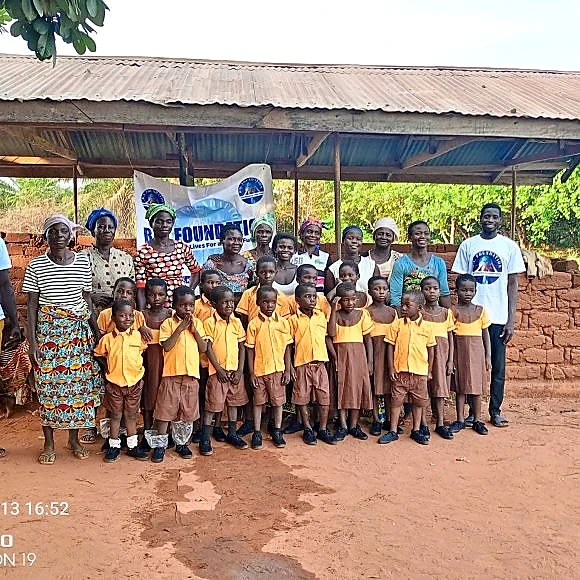
Jerusalem is a farming community of about 375 people in 61 households. Its youngest pupils learn in an open mud-brick pavilion with a poor floor, and with no toilet, no water, and no electricity.
The nearest other school is about 30 minutes away on foot, on a road that is not safe for young children. Only 35 of the 88 children aged 3 to 12 in the community are enrolled in school. Girls and children from vulnerable families are the ones most often left out, and the lack of sanitation puts every child’s health at risk.
Together with the community, the foundation will build a simple, solid school. The Chief provides the land, and parents give their labour, sand, and stones. The foundation has already provided uniforms and shoes so children can attend with more dignity.
Once it opens, the school will be run by the Ghana Education Service, which provides the teachers and covers running costs, and the community will look after the building. Built to last at least 30 years, it costs less than €20 per child per year. No administration costs are included in the budget.
What the project will build
Three classrooms and a veranda
Room for every level from KG1 to Basic 3, and for the growing number of pupils.
Toilets and handwashing
A toilet block with four seats, separate for girls and boys, and a handwashing station.
Water and electricity
Water from one of the community’s two mechanised boreholes, with a storage tank, and a connection to the national grid that already runs through the community.
Furniture and learning materials
Kindergarten tables and chairs, desks, and teacher tables made by a local carpenter, with basic teaching and learning materials.
Timeline
Month 1: Preparation
Quotes from local builders, a contract, and an agreement with the community.
Months 2–4: Foundation and walls
Built with labour from the community, in the dry season.
Months 5–8: Roof and finishing
Roof, doors, windows, floor, and plastering.
Months 9–11: Services and furniture
Toilets, water, electricity, furniture, and learning materials.
Month 12: Handover
Opening, handover to the community and the education authority, and a final report to funders.